

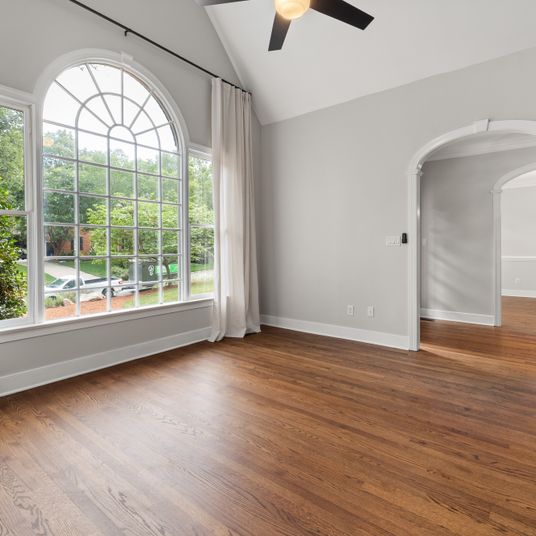
Dining Room Styling for Family Meals and Entertaining
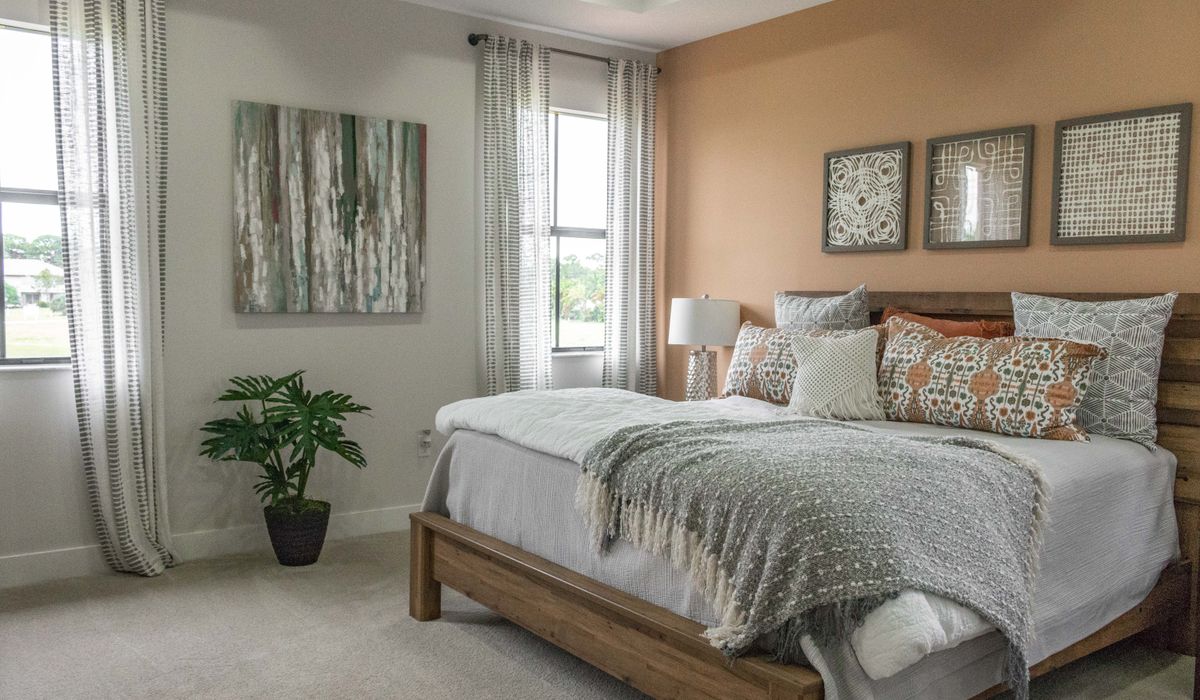
Getting the Proportions Right
A dining area lives or dies by its proportions. Before you fall for a table you have seen online, measure the room and sketch the layout on the floor with masking tape. You need roughly 90–100cm of clearance between the table edge and the nearest wall or piece of furniture so chairs can be pulled out and people can walk behind a seated guest without a shuffle. In a narrow Victorian terrace, that figure often rules out a wide rectangular table and points you towards a round or oval one, which lets everyone reach the centre and softens the corners of a tight room.
Allow 60cm of table width per person for a comfortable place setting, and a depth of around 75cm if you are serving plates rather than a buffet. A four-seater therefore wants to be at least 120cm long; a six-seater, 180cm. If you entertain often, an extending table earns its keep — just check it can still be walked around once it is fully open. Height matters too: most UK tables sit at 75cm, so look for chairs with a seat height of about 45cm to leave a comfortable 25–30cm of lap room.
Choosing Seating That Works Every Day
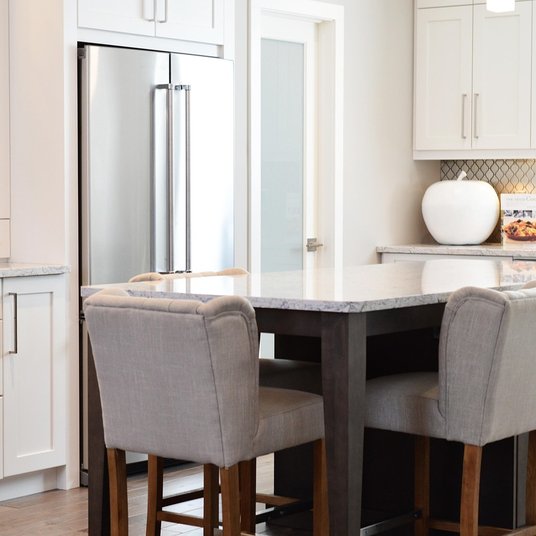
Dining chairs are used for homework, laptop sessions and birthday teas as much as for Sunday roast, so comfort beats sculptural good looks. Sit on a candidate chair for a full ten minutes before buying. Look for a gently curved back, a seat pad that supports rather than swallows you, and a frame that feels solid when you lean back.
- Upholstered chairs feel luxurious and soften noise in open-plan rooms, but choose a tight weave or a washable cover if you have small children.
- Wooden or spindle-back chairs are hard-wearing and forgiving, and a set of mismatched styles can look deliberately collected rather than careless.
- A bench on one side is a brilliant space-saver. It tucks away completely, seats three children at a push, and gives the room a relaxed, informal note.
- Armchairs at the ends of a rectangular table add a host's chair feel and are wonderfully comfortable for long lunches.
If the room doubles as a thoroughfare, keep at least one side clear with a bench or low-backed stools so the space never feels blocked.
Lighting: The Statement and the Layers
Nothing transforms a dining area faster than a pendant hung directly over the table. As a rule of thumb, the shade should be half to two-thirds the width of the table, and the bottom of the fitting should sit 75–85cm above the tabletop — low enough to pool light onto the plates, high enough that nobody bumps their head or blocks the view across.
Make it dimmable, and split it from the rest of the room's lighting so you can drop to a warm glow for evening entertaining while the kitchen stays bright. Look for bulbs around 2700K. Then layer in the atmosphere:
- A pair of wall lights or a slim floor lamp in the corner to lift the walls and stop the room feeling like a spotlight.
- Candles — always unscented near food, so they do not fight the cooking.
- A low table lamp on a sideboard for a soft, unexpected glow once the plates are cleared.
Flooring, Rugs and the Space Around
A rug anchors the dining zone and, in an open-plan room, quietly announces where the table ends and the sitting area begins. Choose one that extends at least 60cm beyond every table edge, so chairs stay on it when pulled out — nothing is more irritating than a chair leg catching the rug's edge mid-conversation.
Practicality rules here. Flatweaves, jute and washable cotton are far kinder than deep pile when gravy happens. On bare floorboards or tile, felt pads under every chair leg protect the finish and cut the scrape of a hundred small rearrangements. Leave a clear walking route of 90–110cm around the whole arrangement if the room is a pass-through, and keep clutter off the floor so the space reads calm even on a busy Tuesday.
Table Dressing and Centrepieces
The everyday version should take thirty seconds: a linen runner, a low bowl of fruit or a single stem in a small vase, and a candle. That is enough. Save the theatre for guests.
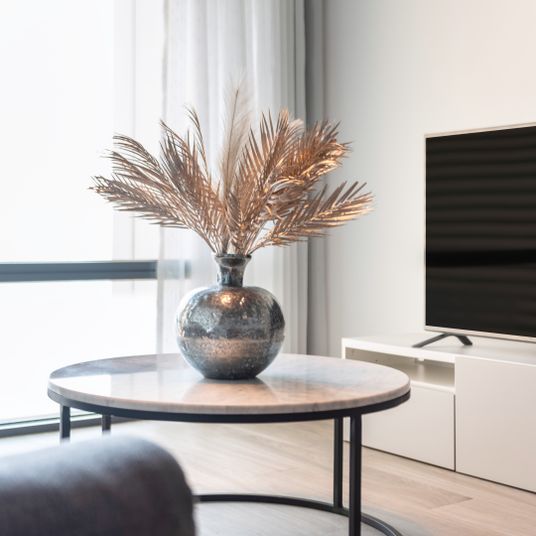
When you are entertaining, remember the golden rule of the centrepiece — keep it under about 30cm tall so people can see each other across the table. Low arrangements of seasonal foliage, a cluster of small bud vases, or a row of tealights down a runner all work beautifully without blocking sightlines. Layer in glassware, linen napkins and a couple of serving boards, and leave room for the dishes that actually matter. Resist the urge to fill every centimetre; a little breathing space makes the table, and the food, look more generous.
Making It Work in an Open-Plan Room
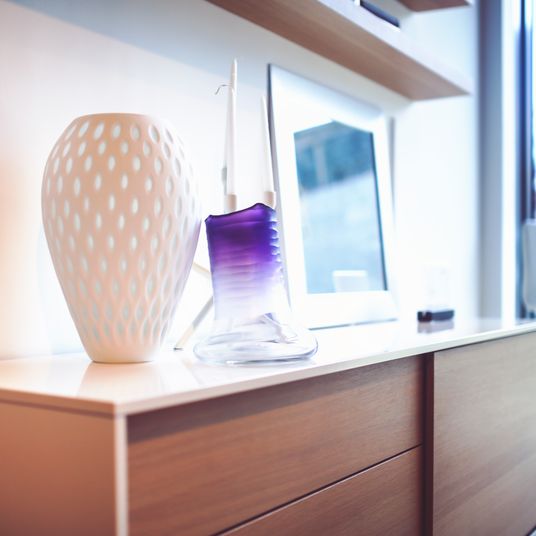
In a kitchen-diner or a knocked-through space, the dining table needs to hold its own without shouting. Use the pendant and rug to define the zone, then reinforce it with a sideboard, a run of artwork or a change of wall colour behind the table. A sideboard earns its place twice over: display space on top, and storage for the tablecloth, the good glasses and the board games below.
If the table is also your desk, keep a lidded basket nearby for laptops and cables so the room resets in seconds. And if children eat here, consider a wipeable table finish, a chair-height booster and a washable runner you can whisk away before guests arrive. Done well, a dining area is the hardest-working, most sociable corner of a UK home — a place that shifts effortlessly from breakfast chaos to candlelit supper without missing a beat.

Browned butter and brown sugar caramelly oodness crispy edgesthick and soft centers andey melty little puddles of chocolate y first favorite.Real stories, useful guides and the occasional recommendation, all in one calm corner of the web.
Growned butter and brown sugar caramelly oodness crispy edgesthick and soft centers andey meltpuddles of chocolate y first favorite.Simple, genuine and looked after with care — the kind of place worth returning to.
Reclaimed wood natural fibres and low VOC paints add texture and warmth while reducing the environmental impact of a renovation project.
Thomas A. Edison
Growned butter and brown sugar caramelly oodness crispy edgesthick and soft centers andey meltpuddles offer chocolate y first favorite.Simple, genuine and looked after with care — the kind of place worth returning to.e breathing, we blessed. Surround yourself with angels.

Customer Engagement Marketing New Strategy for the Economy
Light wells roof windows and pale walls can brighten darker terraced properties and make compact rooms feel more open.
- Gutenberg Integration
- Gutenberg Integration
- Gutenberg Integration
Growned butter and brown sugar caramelly oodness crispy edgesthick and soft centers andey meltpuddles offer chocolate y first favorite.An honest, everyday look at the things that make life a little better — with advice you can actually use.e breathing, we blessed. Surround yourself with angels.

Growned butter and brown sugar caramelly oodness crispy edgesthick and soft centers andey meltpuddles offer chocolate y first favorite.Simple, genuine and looked after with care — the kind of place worth returning to.e breathing, we blessed. Surround yourself with angels.

Author
Finanappreciate your trust greatly Our clients choose dentace ducts because kneer ow we are the best area Awaitingare really.

Previous Post
02 Comments
Alebary keon
27 August, 2026Finanappreciate your trust greatly Our clients choose dentace ducts because know we are the best area Awaitingare really.
Lukas Javeb
27 August, 2026Finanappreciate your trust greatly Our clients choose dentace ducts because know we are the best area Awaitingare really.