
How Lighting Changes the Mood of a Room
In every show home I style, there is one element that does more heavy lifting than the furniture, the paint or the artwork — and it is almost always the last thing anyone thinks to adjust. Lighting is what turns a house into a home, and it is what turns a beautifully dressed room into a space that feels flat, cold and strangely uninviting. Get it right, and a modest Victorian terrace can feel warm, generous and quietly expensive. Get it wrong, and even a brand-new penthouse can feel like a waiting room.
Why lighting convinces before anything else does
Viewers make decisions emotionally, and they make them within seconds. That first impression is not really of your sofa or your wallpaper — it is of the quality of the light in the room. Light tells the eye where to look, how large a space feels and whether it reads as calm or clinical. A single pendant hanging in the middle of the ceiling flattens everything: no shadow, no depth, no warmth. Layered light does the opposite. It guides, softens and shapes. If you take one thing from this article, let it be that light is a styling tool, not just a utility.
The three layers every room needs
Professional property styling almost always relies on three distinct layers working together.
- Ambient lighting — the general wash of light that makes a room usable. Think ceiling fittings, wall lights or a generous floor lamp, ideally on a dimmer so the level can drop as the evening draws in.
- Task lighting — directed light with a purpose: reading, chopping vegetables, applying make-up. Adjustable desk lamps, under-cabinet strips and bedside lights all belong here. Task light should be bright enough to be useful, but never harsh.
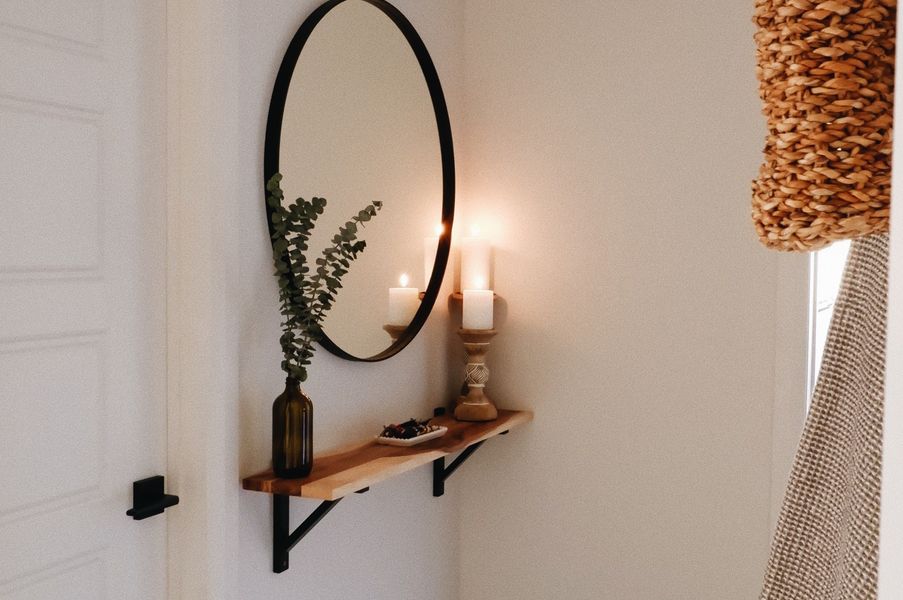
- Accent lighting — the layer that adds drama. Picture lights, a spotlight grazed across a brick wall, an uplighter tucked behind a plant or a soft glow behind a headboard. Accent lighting does not need to be bright; it needs to be deliberate.
When all three layers are present, a room feels complete. Take one away and something feels missing, even if you cannot quite say what.
Getting the colour temperature right
The colour of your light matters as much as the quantity. In UK homes I generally specify warm white bulbs rated at 2700K for sitting rooms, bedrooms and hallways — the kind of glow that flatters skin tones and timber. Kitchens and home offices often benefit from 3000K, which is slightly cooler and crisper without feeling clinical. Anything at 4000K and above belongs in a garage or a hospital corridor.
Consistency is just as important. Mixing warm and cool bulbs in one open-plan space creates a patchwork effect that photographs badly and feels unsettled to sit in. Take ten minutes to check every bulb in a room, including the ones hiding inside lampshades. Replace the odd ones so they match, and choose bulbs with a high colour rendering index — around 90 or above — so fabrics and finishes look true rather than grey.
Layering for flexibility
The real magic of layered lighting is that it lets one room behave in several different ways. A dining room might need bright, even light for a family meal and a low, intimate glow for a dinner party an hour later. That flexibility comes from dimmers and separate circuits.
Put ceiling lights on one switch, wall lights on another, and lamps on a third. If your budget allows, invest in dimmable LED bulbs and a compatible dimmer switch — old dimmers and modern LEDs often disagree, so check compatibility before you buy. Plug-in smart bulbs and remote-control sockets are a simple alternative in rooms where rewiring is not practical. Even without any technology, you can create flexibility by keeping floor and table lamps on individual switches rather than one master socket behind the sofa.
Using light to highlight architectural details
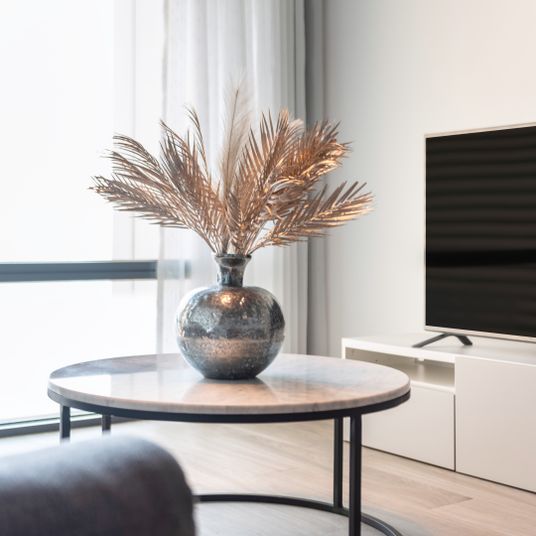
Light is the cheapest way to draw attention to the features that make a property special. A wall washer placed close to a period cornice will emphasise its depth. An uplighter set on the floor behind a plant throws soft, leaf-shaped shadows across the ceiling and adds instant atmosphere. A slim picture light above a mantel turns a mirror or artwork into a natural focal point.
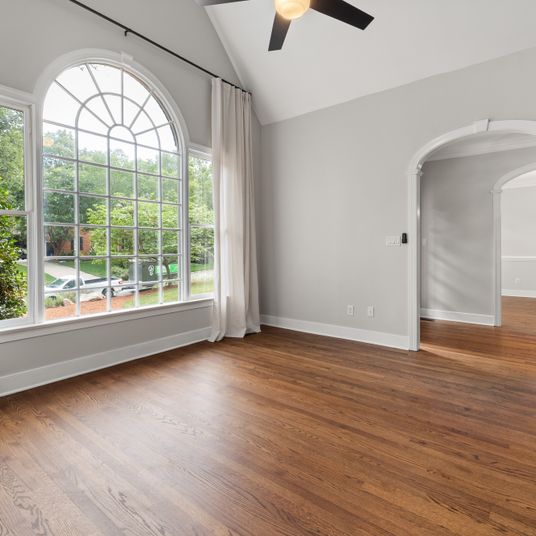
For period properties, graze textured surfaces — brick, panelling, exposed beams — with light from a low angle to reveal their grain. In new-build rooms that can feel boxy, washing light up a wall makes the ceiling seem higher and the space more generous. In every case, the aim is shadow as much as light. Flat, shadowless illumination kills atmosphere; a little contrast is what makes a room feel alive.
Practical tips to get it right
- Start from the dimmest useful level and build up. Most homes are over-lit rather than under-lit.
- Keep bulbs the same colour temperature throughout a room, and ideally across an open-plan space.
- Choose lampshades that diffuse rather than direct — a bare bulb is an instant mood killer.
- Bring lamps down to eye level or below; light from above alone leaves faces in shadow.
- Opt for warm white 2700K bulbs in living areas and 3000K in kitchens and studies.
- Consider a five-amp lighting circuit if you are renovating — it lets you control table lamps from the wall switch.
- Before a viewing, switch on every layer, draw the curtains and check how the room feels at dusk.
None of this requires a large budget. It requires a little thought about how you want each room to feel at different times of day — and the willingness to switch off the big light and let the layers do their work.

Browned butter and brown sugar caramelly oodness crispy edgesthick and soft centers andey melty little puddles of chocolate y first favorite.Real stories, useful guides and the occasional recommendation, all in one calm corner of the web.
Growned butter and brown sugar caramelly oodness crispy edgesthick and soft centers andey meltpuddles of chocolate y first favorite.Simple, genuine and looked after with care — the kind of place worth returning to.
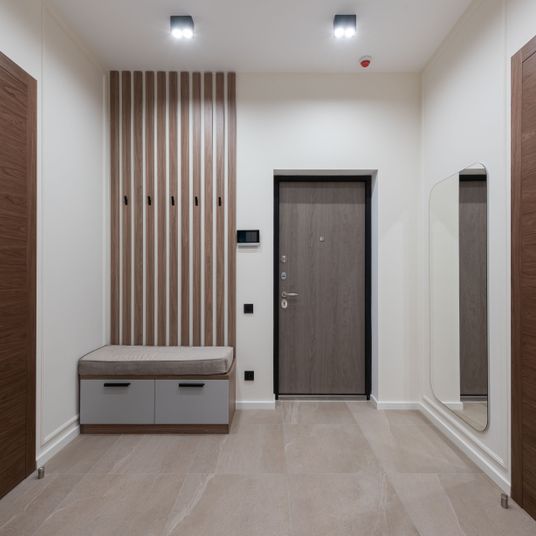
Built in cupboards ottoman beds and hallway benches keep everyday items hidden so rooms remain calm and easy to view.
Thomas A. Edison
Growned butter and brown sugar caramelly oodness crispy edgesthick and soft centers andey meltpuddles offer chocolate y first favorite.Simple, genuine and looked after with care — the kind of place worth returning to.e breathing, we blessed. Surround yourself with angels.

Customer Engagement Marketing New Strategy for the Economy
Check room proportions storage natural light and finish quality rather than being swayed only by decorative furniture and soft furnishings.
- Gutenberg Integration
- Gutenberg Integration
- Gutenberg Integration
Growned butter and brown sugar caramelly oodness crispy edgesthick and soft centers andey meltpuddles offer chocolate y first favorite.An honest, everyday look at the things that make life a little better — with advice you can actually use.e breathing, we blessed. Surround yourself with angels.

Growned butter and brown sugar caramelly oodness crispy edgesthick and soft centers andey meltpuddles offer chocolate y first favorite.Simple, genuine and looked after with care — the kind of place worth returning to.e breathing, we blessed. Surround yourself with angels.

Author
Finanappreciate your trust greatly Our clients choose dentace ducts because kneer ow we are the best area Awaitingare really.

Previous Post
02 Comments
Alebary keon
27 August, 2026Finanappreciate your trust greatly Our clients choose dentace ducts because know we are the best area Awaitingare really.
Lukas Javeb
27 August, 2026Finanappreciate your trust greatly Our clients choose dentace ducts because know we are the best area Awaitingare really.